Chapel St. Vincent at Cornillon-Confoux
Cultural and historical site
15 min
shade
There are many chapels in Provence, and it would be impossible to describe them all. This one combines a necropolis with a site overlooking the Étang de Berre. However, you'll need to climb a little higher up towards the village for the panoramic view.
No reproduction is permitted without the written consent of the author. (id8554)
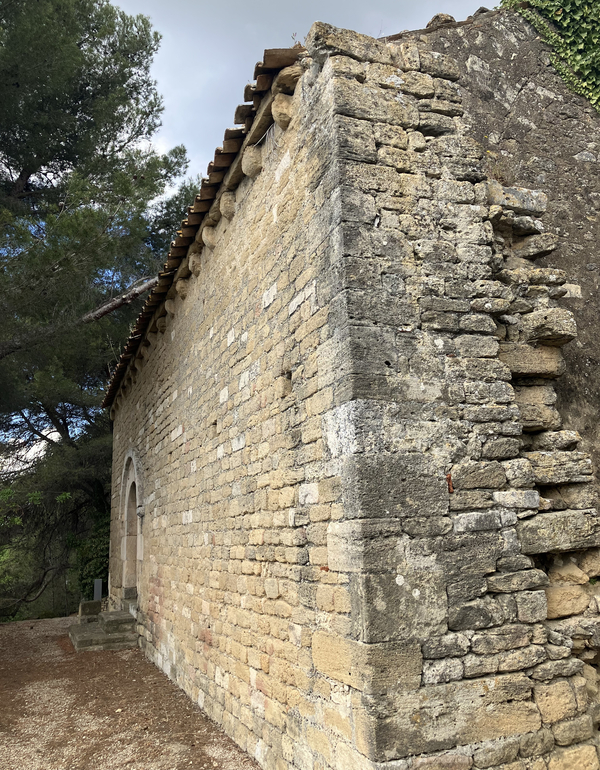
South facade of St. Vincent Chapel in Cornillon-Confoux
This chapel was built in the 11th century by the monks of Montmajour Abbey. Its location near a Salian necropolis dating from the 1st century BCE is no coincidence. Throughout history, churches have sought to claim sites associated with earlier beliefs.
The date of the necropolis is very unclear, one also finds the 5th century BCE as reference.
No reproduction is permitted without the written consent of the author. (id8553)
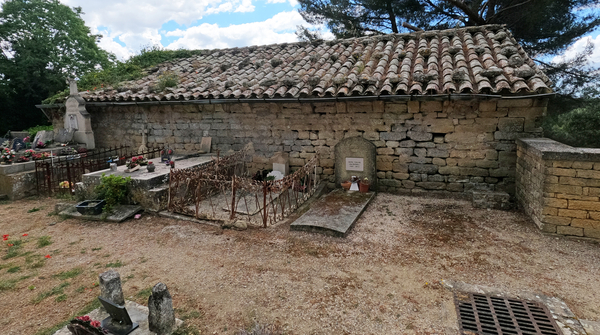
North facade, cemetery side, of St. Vincent Chapel
The site's funerary function remains unchanged. It very quickly became the cemetery chapel, as it still is today.
The bases of the doorway and the corners of the building incorporate reused Gallo-Roman funerary stelae. One of the tombstones bears the inscription "Q CORNELO Q PILOCLE". It was erected in memory of Cornelius Philocles, a freed slave of Greek origin. It is said to have given his name to the present-day village. The other tombstone displays the words "PEREGRINA FL V MANTRONIS F". It is dedicated to Peregrina Mantro, daughter of Lucius Valerio Mantro.
No reproduction is permitted without the written consent of the author. (id8556)
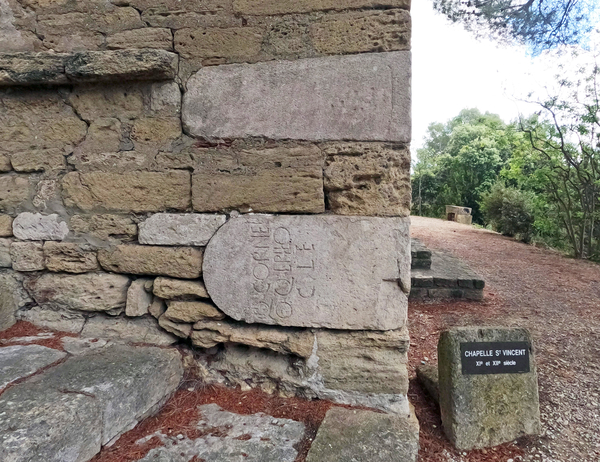
Reused funerary stelae at St. Vincent Chapel
The only current doorway is located on the south side. This round-arched portal is surmounted by a molded arch.
No reproduction is permitted without the written consent of the author. (id8555)
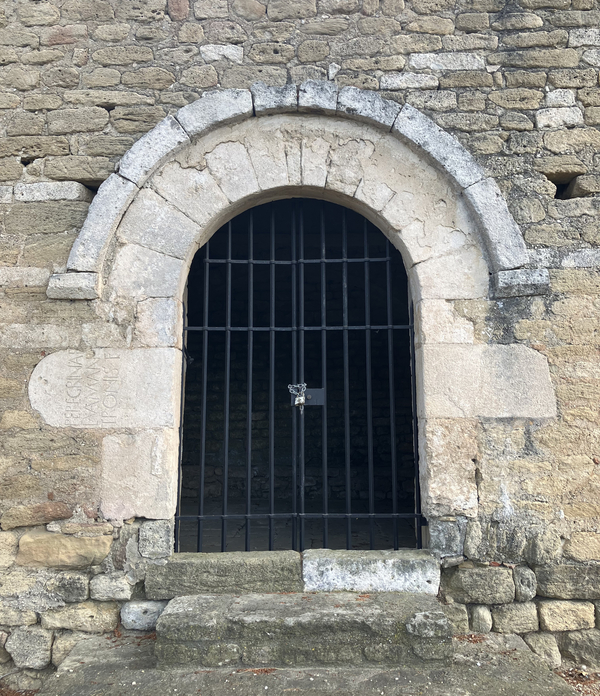
Side door on the south side of St. Vincent Chapel
The chapel is large, measuring 5 x 13 meters, but it no longer has an apse. It was in ruins in 2026, but the municipality plans to undertake renovations.
The chapel has a pointed barrel vault. It is completely empty.
No reproduction is permitted without the written consent of the author. (id8557)
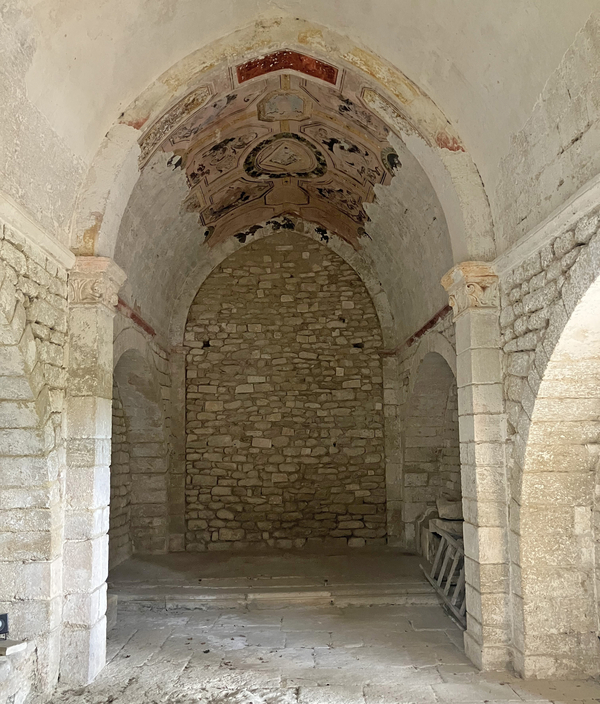
Empty nave and remains of frescoes in St. Vincent Chapel
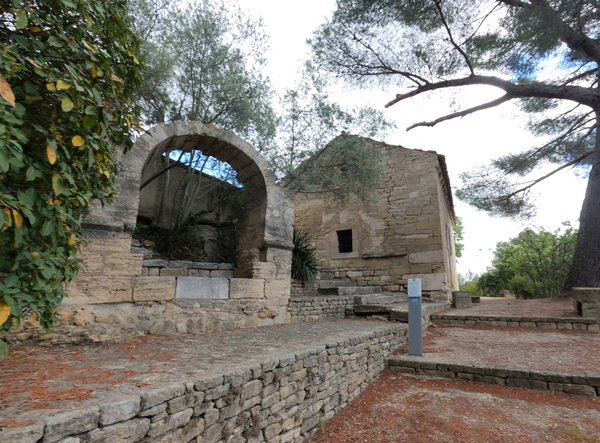
Beneath the chapel lie the remains of a necropolis.
No reproduction is permitted without the written consent of the author. (id8559)
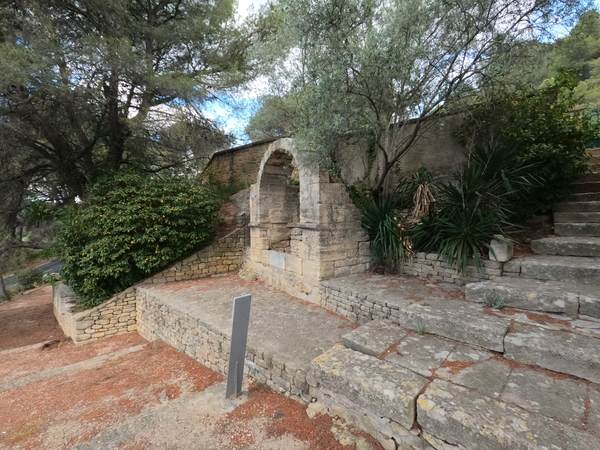
Arch marking the Salyen necropolis
It was discovered during the construction of a new access to the cemetery 1964. Initially, nine sarcophagi from an early Christian necropolis were unearthed. Eighteen more sarcophagi were discovered in 1971.
No reproduction is permitted without the written consent of the author. (id8558)
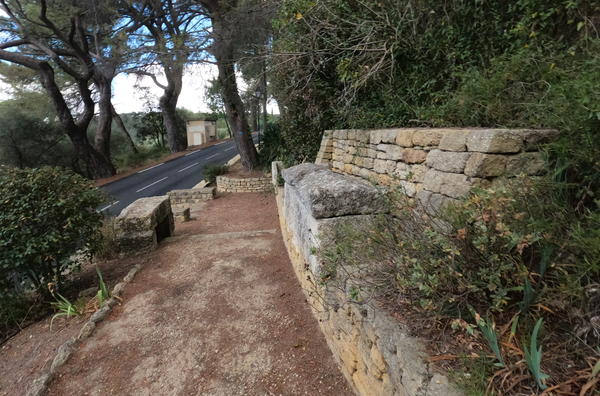
Sarcophagus from the Salyen necropolis
A large quantity of Bell Beaker pottery fragments was also found, allowing the necropolis to be dated to the 1st century BCE. At that time, the area was inhabited by the Salyens (also called Salluvians). However, little is known about this confederation of Roman sites.
No reproduction is permitted without the written consent of the author. (id8561)
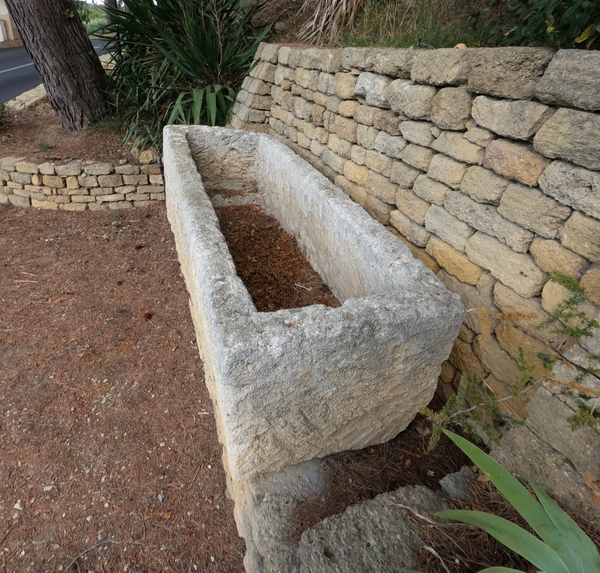
Sarcophagus from the Salyen necropolis
We then climb back up to the upper area to return to the parking lot in front of the chapel. Those who arrived by car can leave it there and follow the path marked on this map on foot to reach the village and enjoy the view.
No reproduction is permitted without the written consent of the author. (id8560)
Under St. Vincent Chapel in Cornillon-Confoux
Access by public transport
Only school bus services on route 591 of the La Métropole Mobilité (only french) network connect Saint-Chamas to Salon-de-Provence via Cornillon. Unfortunately, these schedules rarely correspond to the times when people want to arrive and depart from the location.
The following approach route is also shown on the map on this page with a purple line.
When you get off the bus, you'll be north of the hilltop village. Head west to reach the road along the cliff edge. Turn right, and it becomes a walking path further on. Stay close to the edge.
Further on, you'll find steps and the village wash house. The walk takes you past several viewpoints before leading back to the church square with its trompe-l'œil paintings. Just in front of the church, a staircase descends to the left. Continue down the Chemin du Moulin (Mill Path) to arrive directly at the chapel parking lot.
No reproduction is permitted without the written consent of the author. (id8563)
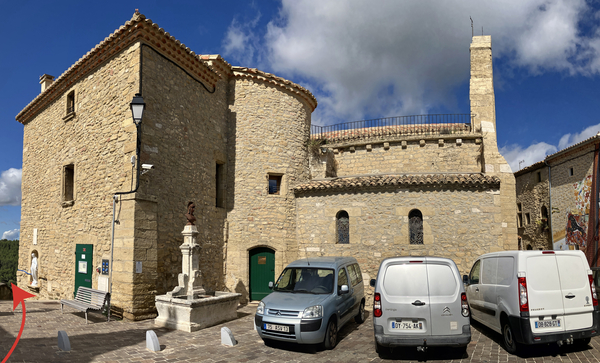
The church and the descending staircase
Access by car
We are north of the Étang de Berre and near the A7 motorway between Avignon to the north and Marseille to the south. From both directions, take the Salon-de-Provence exit and initially follow the direction of Arles on the A54, but take the first exit, named Pelissane. At the roundabout with the air-plane in the centre, head towards Arles, as well as at the next two roundabouts.
Coming from Arles, take the A54 towards Salon-de-Provence and exit at the Grans toll booth, following the direction of Berre.
At the next roundabout, take the exit towards Berre-l'Étang on the D113 and shortly after the exit towards Cornillon-Confoux, as well as at the following roundabout.
This brings you uphill into the village. Turn right, then left. Do not enter the village; instead, descend via the St. Chamas road and look for the entrance to the chapel parking lot on the left.
No reproduction is permitted without the written consent of the author. (id7850)
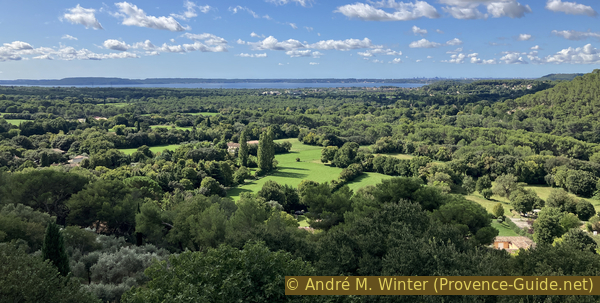
View from Cornillon of the northern part of the Étang de Berre
Parking site
A parking lot is located directly in front of the chapel. Another is further down below the chapel on the Route de St. Chamas. It is in line with a field.
This tour also starts from the same village: Bories around Cornillon-Confoux by mountain bike.
No reproduction is permitted without the written consent of the author. (id8562)
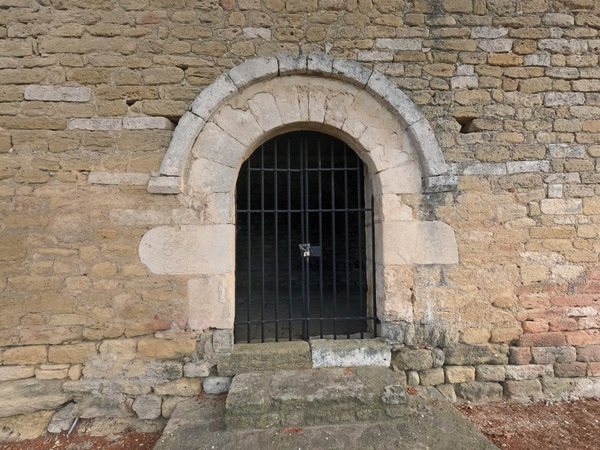
Side door on the south side of St. Vincent Chapel in Cornillon-Confoux