The Sainte Anne hill above Lambesc
Historical and cultural site
30 min
chapel
People undoubtedly come here to visit the Sainte-Anne de Goiron chapel, but on the way there you also pass cave dwellings, in front of which stand buildings, as well as a memorial to the resistance against Nazi Germany. There are therefore three sites, all very close to one another, which are well worth a visit.
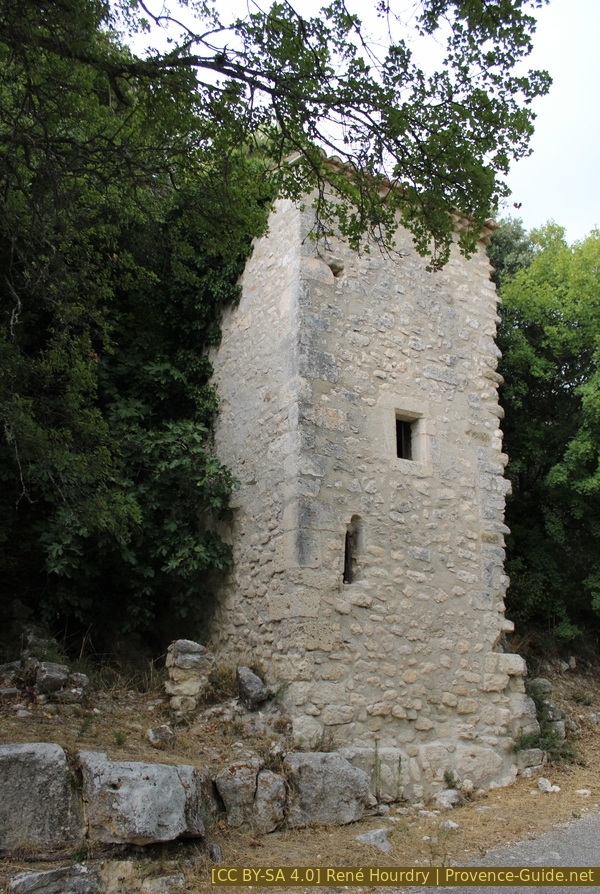
Cave dwelling near Sainte-Anne
Access by car
The site is over 6 kilometres away from Lambesc, the nearest place accessible by public transport, and involves a climb of 280 metres. Marked footpaths link Lambesc to Sainte-Anne, but as they follow the roads, walking there is strongly discouraged.
Sainte Anne is situated in a wooded area between Salon-de-Provence, Aix-en-Provence and the River Durance to the north. Access is always via Lambesc. If arriving via major roads such as the D15 or the D7N, you must leave them and head to the northern part of Lambesc’s old town centre to take the Route de la Roque-d’Anthéron (D67A). At Col Sainte-Anne saddle, turn left (sign for the Monuments aux Héros et Martyrs de la Résistance). The road climbs and, after a hairpin bend to the right, you pass the houses in front of the cave dwellings. A little further on is the car park below the Resistance monument.
The cave dwellings are located just ahead of the car park, you can pull over at the side of the road to take a look. Two stabilised ruins mark the site. The entrance is blocked off.
These cellars served as shelters during the various wars throughout the Middle Ages and perhaps even earlier. They provided refuge for pilgrims visiting the chapel. These sites were also used by the Resistance during the latter half of the Second World War. They sought out secluded locations with dense vegetation and hidden natural cavities, all of which are found on this hill.
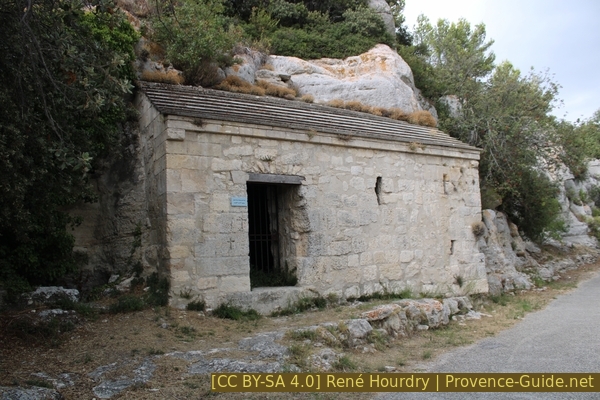
Tower in front of cave dwelling near Sainte-Anne
Maquis de Sainte-Anne was the name given to the French Resistance movement fighting against the Nazi German occupiers in the Chaîne des Côtes ridge. It comprised around 350 men from the villages of Rognes, Lambesc, La Roque-d'Anthéron and Charleval. They began gathering here on 5 June 1944. We are in the midst of the Germans' defensive battle, where their actions are escalating dramatically.
On 11 June 1944, members of the Maquis retaliated by killing a German soldier during a roadblock. The reprisals were severe. Men from Lambesc were arrested indiscriminately and access to the Massif des Costes was blocked. These hills were overrun on 12 June 1944. Resistance fighters were executed as Nazi troops advanced.
The intelligence enabling the encirclement of the Manivert plateau came from the collaborator Erick (German code name), who worked for the head of the Marseille Gestapo, Ernst Ducker. This Nazi agent was shot dead in early August 1944 by Ducker, who had grown exasperated by the agent’s financial demands.
No reproduction is permitted without the written consent of the author. (id8568)
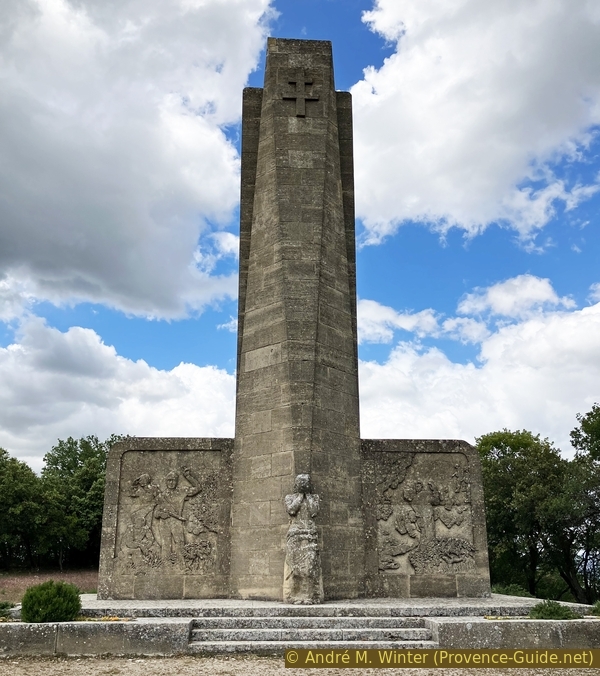
Monument des héros et des martyrs de Sainte Anne on Plateau Manivert
The monument stands in a clearing. It is one of the most significant monuments in the Bouches-du-Rhône dedicated to the Resistance. Construction of the monument began in June 1945, and it was officially unveiled on 16 June 1946.
Commemorative ceremonies are held there every year on 12 June.
No reproduction is permitted without the written consent of the author. (id8567)
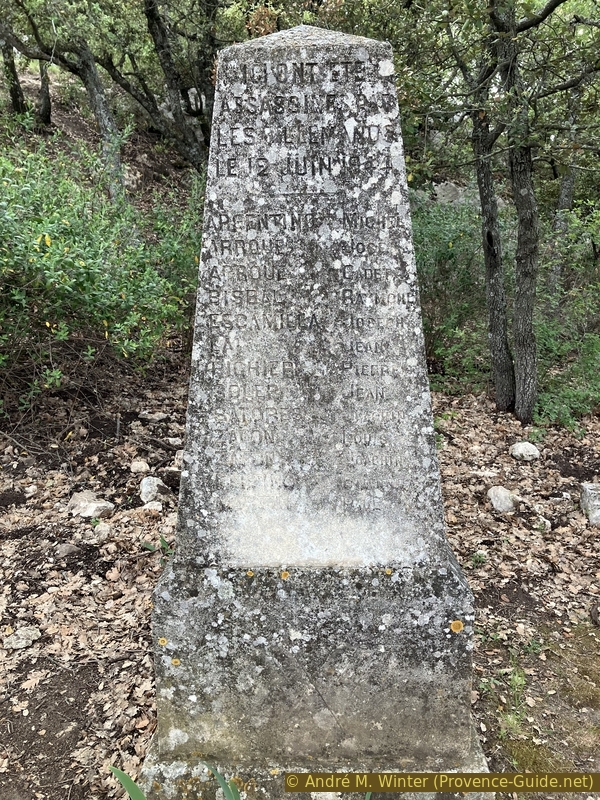
Memorial to the twelve members of the Resistance murdered on 12 June 1944 in Sainte Anne
Beneath the large monument and closer to the car park are smaller memorial stones and gravestones, which were likely erected before the large monument was installed further up.
No reproduction is permitted without the written consent of the author. (id8566)
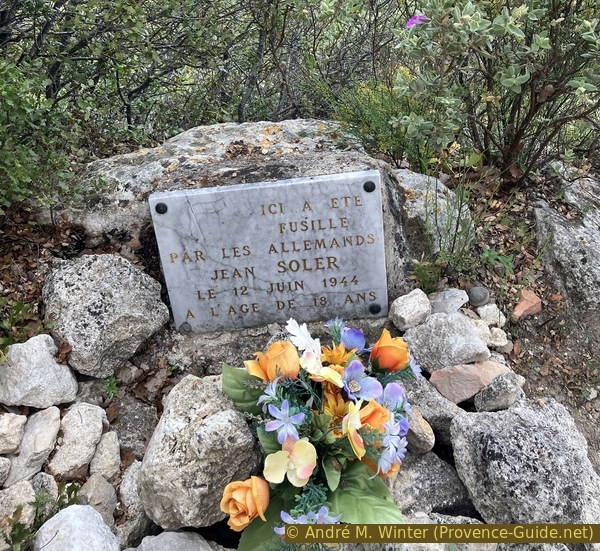
Site of the murder of Jean Soler on 12 June 1944 by the Nazis in Sainte-Anne
The Romanesque chapel was built in the shape of a Latin cross as early as the 11th century by the forerunners of the monks of Silvacane. Like others, the chapel stands on an ancient pagan site.
No reproduction is permitted without the written consent of the author. (id8572)
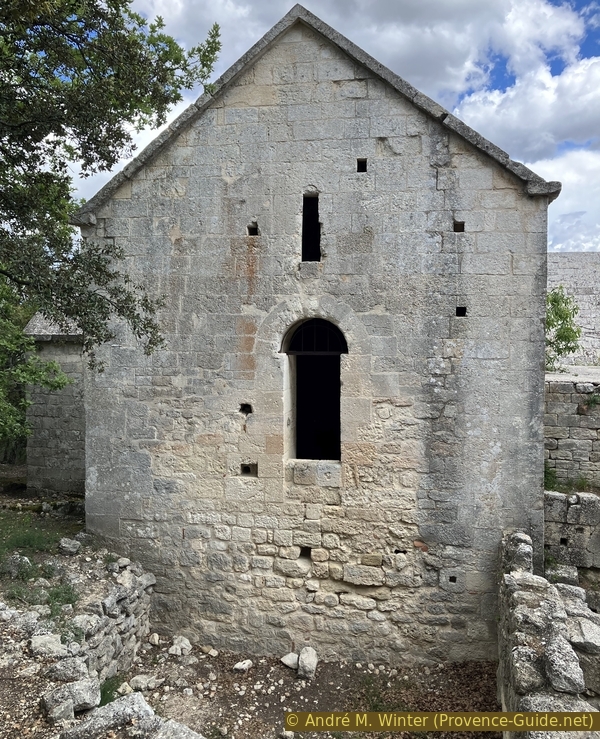
The Chapel of Sainte Anne de Goiron
It changed hands several times. Known as the Chapel of Sainte Marie, it first belonged to the Benedictine Abbey of Saint André in Avignon, then to the Cistercian Abbey of Silvacane, and finally to the Chapter of Aix.
In the 15th century, it was renamed Sainte Anne and became a place of pilgrimage for prayers for rain.
No reproduction is permitted without the written consent of the author. (id8571)
Side view of the Sainte Anne Chapel de Goiron
The chapel's roof is covered with slate slabs, which are flat stones quarried from the rocks of the plateau itself. A bell tower, now without a bell, rises above the chancel.
No reproduction is permitted without the written consent of the author. (id8570)
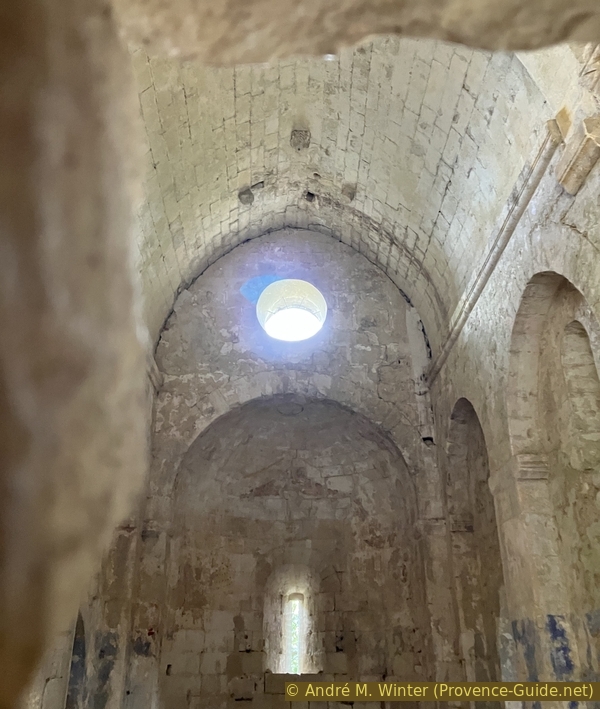
The vaulted ceiling of the nave of the Sainte Anne Chapel de Goiron
Note the tombs carved directly into the rock and situated around the chapel.
Around the religious building there are also covered caves that once served as shelters for pilgrims. There are also water pipes and a cistern, evidence of the site’s frequent use.
No reproduction is permitted without the written consent of the author. (id8569)
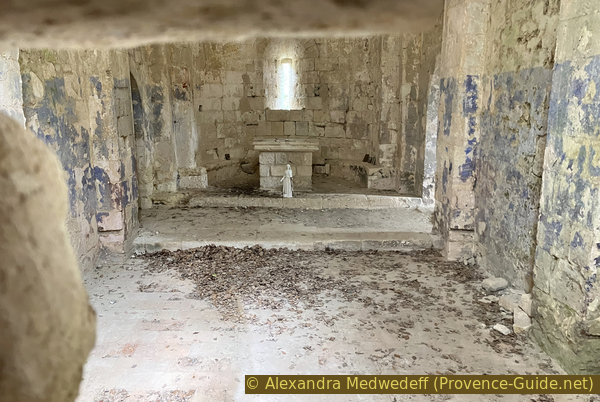
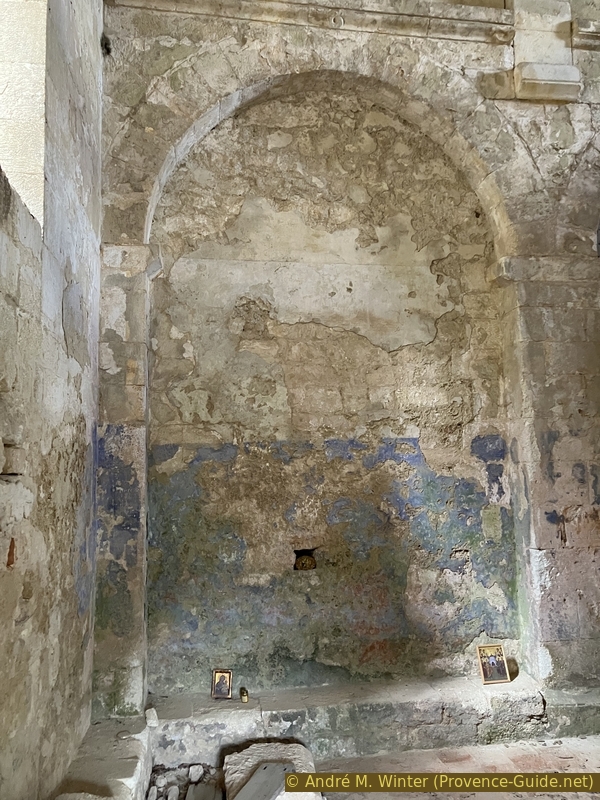
The altar of the Sainte Anne Chapel de Goiron
No reproduction is permitted without the written consent of the author. (id8576)
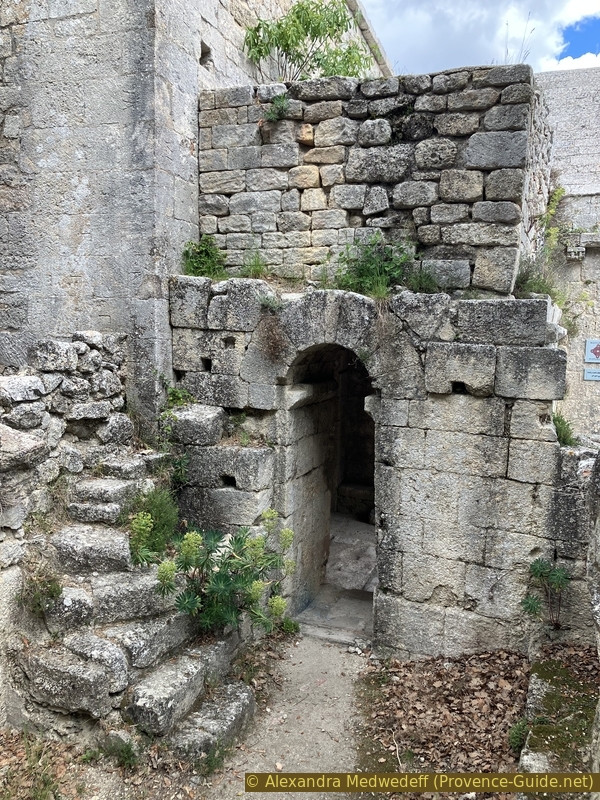
Side porch of the Chapel of Sainte Anne de Goiron
No reproduction is permitted without the written consent of the author. (id8575)
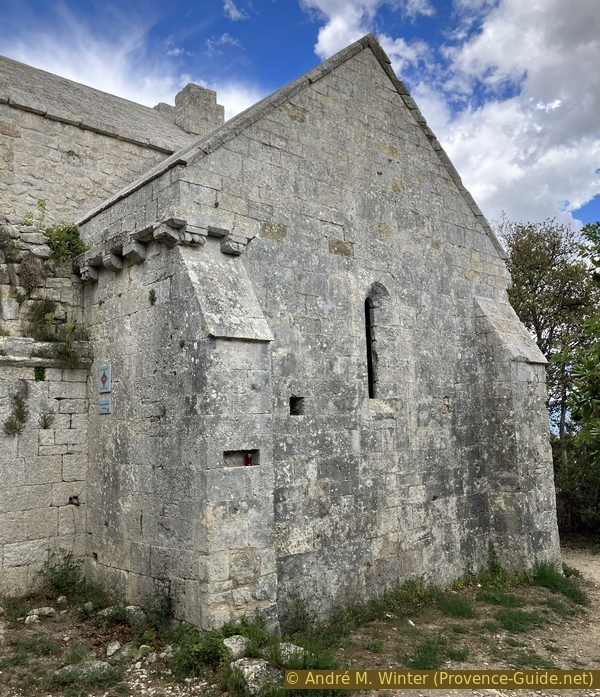
South side chapel of the Sainte Anne Chapel de Goiron
No reproduction is permitted without the written consent of the author. (id8574)
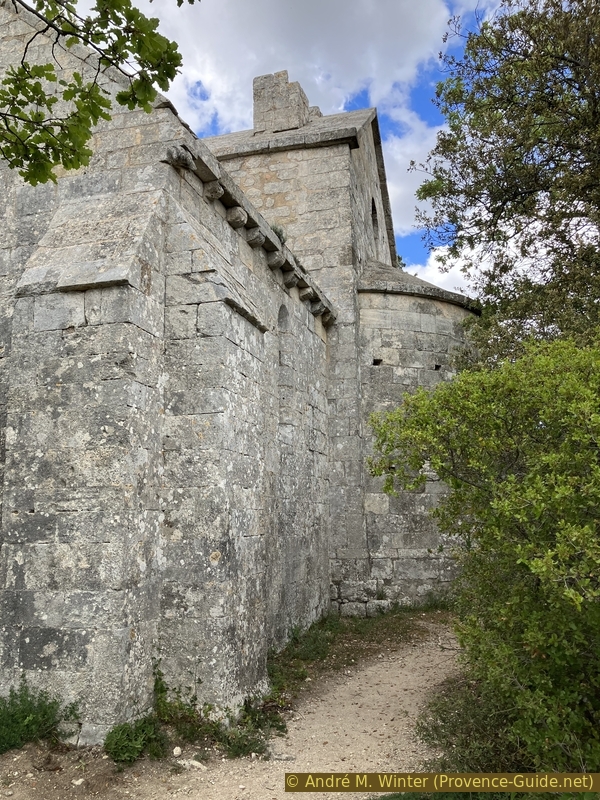
The apse of the Chapel of Sainte Anne de Goiron
No reproduction is permitted without the written consent of the author. (id8573)
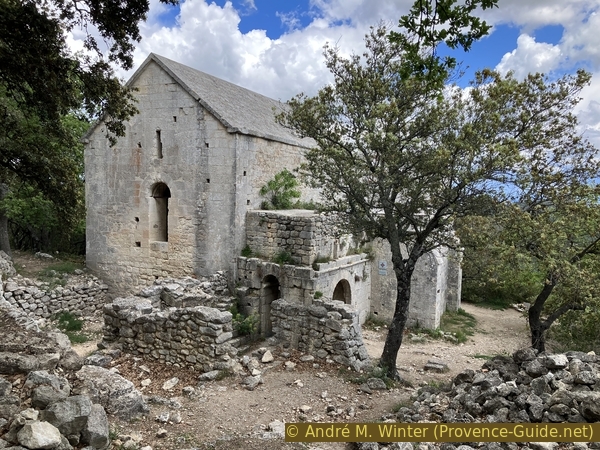
The Chapel of Sainte Anne de Goiron